Get Connected!

Come and join our community. Expand your network and get to know new people!

View All Groups

If you are playing Arc Raiders, understanding blueprints and crafting is a key part of staying effective in missions. One item that often comes up is the Remote Raider Flare and its blueprint. Below, we’ll cover how this blueprint works, how to craft the flare, and practical tips for using it in missions.What is the Remote Raider Flare Blueprint?In general, a blueprint in Arc Raiders is a recipe that allows you to craft a specific item. The Remote Raider Flare Blueprint is no different. Once you have this blueprint, you can craft the Remote Raider Flare, which is an item used in missions for signaling or tactical purposes.Most players treat blueprints as essential progression tools because you can’t craft certain items without them. Unlike standard loot, a blueprint itself doesn’t have a trade value—its value is primarily in allowing you to make the flare.Where to Find the Remote Raider Flare BlueprintBased on player experience, the Remote Raider Flare Blueprint is usually found through looting. Specifically:

  • You will mostly encounter it on the topside.
  • Looting areas that are marked as high-risk or hard-to-reach often yields the blueprint more frequently.
  • It does not usually drop from enemies, so focusing on lootable locations is your best approach.
In practice, players often run multiple rounds in the topside areas to maximize the chance of finding this blueprint. Persistence is key—most players report that it’s not guaranteed to drop every time.How to Craft the Remote Raider FlareOnce you have the blueprint, crafting the flare is straightforward, but you need specific materials. Most players usually gather these in advance to avoid running back and forth. Here’s what you need:
  • Utility Station 1 – This is the crafting station required to make the flare.
  • 2x Chemicals – These are common resources, usually gathered from industrial or loot areas.
  • 4x Rubber Parts – Rubber parts are often found in mechanical or storage zones.
Crafting is simple: access the Utility Station 1, select the Remote Raider Flare blueprint, and combine the materials. In general, the crafting process is instant, and you’ll have the flare ready to use immediately.Many players keep a few flares on hand, especially before missions in open areas, because they can be helpful for coordinating team movements or calling attention to a specific location.How Do Players Usually Use the Remote Raider Flare?In practice, the Remote Raider Flare is not a weapon but a tactical tool. Here’s how most players use it:
  1. Signaling teammates – If you are playing in a squad, flares can mark enemy locations or mission objectives.
  2. Distraction or diversion – Some players throw flares to distract enemies temporarily while completing objectives.
  3. Navigation aid – On larger maps, flares are often used to signal safe zones or mark points of interest.
It’s worth noting that the flare has limited duration. Most players plan its use carefully rather than wasting it immediately. In general, flares are more useful in missions with a lot of verticality or open space, where visual markers matter.Tips for Managing Your Blueprints and Flare CraftingHere are some practical tips from players who regularly craft the Remote Raider Flare:
  • Stock materials in advance – Chemicals and rubber parts are used in multiple recipes, so keeping a small inventory prevents interruptions.
  • Keep blueprints organized – Many players have a dedicated area for blueprints so they can quickly find and craft items before a mission.
  • Experiment with flare placement – Throwing flares in different locations can help you understand their effective range and visibility.
  • Trade wisely – While the blueprint itself cannot be sold, knowing which items are valuable to your team is key. Some players may sell ARC Raiders items to free up inventory space, but flares are often kept for tactical advantage.
By following these habits, you’ll avoid common mistakes like running out of materials mid-mission or using a flare ineffectively.Common Questions About the Remote Raider Flare BlueprintQ: Can I craft the flare without the blueprint? No, you cannot. The blueprint is required, and most players emphasize that securing the blueprint first is the main step.Q: How often does the blueprint drop? Drops are not guaranteed. In general, repeated looting of topside areas increases your chances. Player experience suggests it’s best to plan for multiple runs.Q: Are there alternatives to the Remote Raider Flare? Some players use other signaling tools, but the flare is unique in its range and visibility. For coordinated squads, it remains the preferred choice.Q: Should I sell ARC Raiders items if I already have duplicates? Many players sell ARC Raiders items to manage inventory or earn resources. However, blueprints like the Remote Raider Flare Blueprint are usually kept since they are critical for crafting.The Remote Raider Flare Blueprint is a small but important part of Arc Raiders. It requires some effort to find, and the crafting materials must be gathered in advance. In practice, using the flare effectively can make a difference in missions, especially for squad coordination and tactical signaling. Most players find that having a few flares ready before a mission improves efficiency and team communication.By understanding where to loot, how to craft, and how to use flares, you’ll be better prepared for the challenges of Arc Raiders without wasting resources.Tips and Tricks: Arc Raiders Combat Mk3 Flanking Blueprint Guide

Read More...

I finished making some last quick fixes and pushed the latest changes to Codeberg.You can now clone the repository from... Show more

Loading content, please wait.

My Usenet reader project,now renamed to BeGroups,is making good progress.This is the final screenshot that will also be included in the Git... Show more

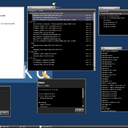
My Usenet reader project,now renamed to BeGroups,is making good progress.This is the final screenshot that will also be included in the Git repository.I know,I originally promised one more week and then it took more like two months to get here.Didn't have much time for the project recently,but now it's really only a matter of cleaning up a few remaining minor issues that could confuse users before I'm going to make a first preview public.

A few minutes ago,I successfully posted the first test article using my own Haiku-native Usenet newsreader Item.Took me some time to figure out why... Show more

Hello Haiku users, I wish you all a happy new year 2026! May Haiku become successful and many new apps be developed. This will be the year of the Haiku Desktop!

Arc Raiders has several missions that test your combat skills and your understanding of the game’s mechanics. One of the early quests that most players encounter is “The Right Tool.” In this guide, I’ll break down how this quest works, what to expect in practice, and tips based on what most players do when they tackle it.What is “The Right Tool” quest about?In general, this quest is designed to familiarize you with upgraded weapons and the mechanics of taking down ARC machines. The story context is minimal: you’re asked to test a new weapon called the Ferro IV on several enemy types.The in-game dialogue is straightforward: Tian Wen asks for a volunteer to test out the upgraded Ferro, saying it should cut through ARC plating easily. Your task is to put this to the test on specific enemies and report back.For most players, this quest serves both as an introduction to weapon upgrades and as a low-risk combat challenge.What are the objectives?“The Right Tool” has a few clear objectives:

  1. Destroy a Fireball
  2. Destroy a Hornet
  3. Destroy a Turret
These are common ARC enemies that players usually encounter in the early areas. In practice, Fireballs and Hornets are mobile targets, while Turrets are stationary and require a slightly different approach.
  • Fireballs move quickly, so most players find it easiest to use the Ferro IV’s high damage output and aim for the weak points.
  • Hornets often fly in patterns, so patience and timing are key. Waiting for them to come close rather than chasing them usually works better.
  • Turrets can be tricky if left unattended because they deal constant damage. In general, players try to take cover and use heavy ammo to destroy them quickly.
Completing these objectives rewards you with in-game items and helps you practice your aiming and weapon handling.Where do I find these enemies?The quest can be completed in three main maps:
  1. Dam Battlegrounds – Most players start here because the layout is relatively open, which makes tracking Fireballs and Hornets easier.
  2. Spaceport – This map has a mix of open areas and enclosed corridors. Turrets can be tricky here because they often cover choke points.
  3. Buried City – Usually the final map in the sequence, it’s more vertical. Players often have to manage line-of-sight and watch for enemies above or below them.
In general, your choice of map doesn’t change the objectives, but it can affect how you approach each enemy.What equipment do I get for this quest?When you start, you are granted:
  • Ferro IV – This is the main weapon you’ll test. Most players find it effective against the ARC plating because it deals high damage per shot.
  • 20x Heavy Ammo – Useful for turrets or situations where you need to deal a lot of damage quickly.
Additionally, completing the quest gives:
  • Cheer (Emote) – Mostly cosmetic, but fun to use in squads.
  • 1x Stitcher II – A useful upgrade for your arsenal.
  • 1x Extended Light Mag I – Helps with sustained shooting during fights.
In practice, most players rely on the Ferro IV for its efficiency and use heavy ammo sparingly to ensure they don’t run out during the fight.How should I approach the combat?From experience, players usually follow a few basic strategies:
  1. Prioritize enemies – Start with Fireballs or Hornets before Turrets. Moving targets are easier to eliminate early while you have full resources.
  2. Use cover wisely – Especially in Spaceport or Buried City, cover helps mitigate turret damage.
  3. Conserve heavy ammo – Most players reserve it for turrets or when multiple enemies cluster together.
  4. Coordinate in squads – If you’re playing with others, dividing targets works well. One player can handle mobile enemies while others focus on stationary ones.
Also, for players looking to maximize their resources, some in-game communities trade or sell blueprints. It is possible to sell ARC Raiders blueprints quickly on U4N , which many players do to free up inventory space or gain in-game credits.What are common mistakes?Based on general player behavior, some mistakes to avoid include:
  • Rushing all targets at once – This often leads to running out of ammo or being overwhelmed by Turrets.
  • Ignoring map layout – Verticality and choke points can make mobile enemies harder to hit if you aren’t paying attention.
  • Wasting heavy ammo on easy targets – Fireballs and Hornets can often be handled with standard ammo, so save heavy ammo for Turrets.
Avoiding these mistakes makes completing the quest smoother and faster.Why is this quest useful?Most players see “The Right Tool” as more than just a tutorial mission. It helps you:
  • Get familiar with upgraded weapons.
  • Learn enemy behavior for different ARC units.
  • Practice aiming and ammo management in real combat scenarios.
  • Earn initial upgrades that will be useful in later missions.
In general, completing this quest early gives you a slight advantage, especially in terms of understanding how different weapons interact with enemy plating. “The Right Tool” in Arc Raiders is a straightforward but practical quest. By focusing on enemy priorities, using cover effectively, and managing your ammo, most players can complete it efficiently. The rewards, especially the Ferro IV and related upgrades, are useful for early gameplay. Additionally, the quest introduces strategies that are relevant in almost all subsequent missions, making it a valuable learning experience.For players who want to manage their in-game resources efficiently, knowing that you can sell ARC Raiders blueprints quickly on U4N is a practical tip that fits naturally into the gameplay loop.

Read More...

Today I had to deal with AI scrapers DDoSing my OpenGrok instance once again.Oh,how much I hate that.Can't they just,like,clone the Git repository... Show more

Loading content, please wait.

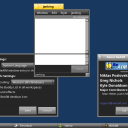
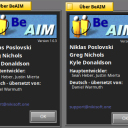
BeAIM is now BumbleBe.For that reason,I released a new version 1.8.0 that contains the new branding (but no difference in functionality).As... Show more

Loading content, please wait.

Translation support in Item is now ready,and to try that everything works as expected,I already created a complete German translation.Now the... Show more

I'm making good progress with Item,my Usenet newsreader project,lately.It does now use the Layout Kit for everything,which fixes various UI glitches... Show more

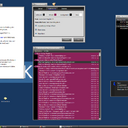
I'm making good progress with Item,my Usenet newsreader project,lately.It does now use the Layout Kit for everything,which fixes various UI glitches and adds support for HiDPI screens.Besides that,I removed support for custom colors and instead use system color constants or hardcoded colors that get mixed/tinted based on system colors,resulting in much improved dark mode support.There's still much to do,however.The next step I'm planning to do is integration with the Locale Kit,so that the UI can be translated to everyones native language.Then,we should probably also have an integrated viewer/editor before releasing the first version to the public.
stoltenberg Funny: I'm using computers since 1992 and your project motivates me to take a look at Usenet for the first time ;-) 2 months ago
loader
loader
Attachment
Niklas Poslovski I missed the prime time of the Usenet,too.I'm too young for that.But seeing the increasing bloat of modern web-based forums (Discourse requires the... Show more 2 months ago
loader
loader
Attachment

Yesterday I took some time fixing a number of small bugs in Haiku once again. I should do that more often. Yes, it also means less time for my other... Show more

I have now uploaded my Usenet newsreader project to Codeberg, so you guys can see the progress I make and try it out yourself. There are no releases... Show more

Loading content, please wait.

Here's a first preview of Item, my Usenet newsreader project. The editor that shows the article content is not part of Item. I plan to add a... Show more

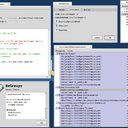
Here's a first preview of Item, my Usenet newsreader project. The editor that shows the article content is not part of Item. I plan to add a built-in article viewer and editor, but that will most likely come later, not in the first release. One of the first things I did was add support for decoding RFC2047-style subjects and authors, without that most entries look broken. There's a lot to do to make Item a modern Haiku application, like using system colors, adding translations with the Locale Kit and improve scaling by using the Layout Kit. Don't expect too much from the first version, but I try to release one soon that at least allows you to read some content.
Marisa Giancarla Looks cool 3 months ago
loader
loader
Attachment

If you want to chat with other Haiku fans sign up at haikumail.online and then add your new account to the XMPP/Jabber client of choice... If you... Show more

Loading content, please wait.

Today I started work on a new project, a native Usenet Newsreader for Haiku. There are two different ones in HaikuArchives, NewsBe:... Show more

Loading content, please wait.
whitepaperkat cool I've been looking for a usenet client 3 months ago
loader
loader
Attachment
Marisa Giancarla Nice! 3 months ago
loader
loader
Attachment
Niklas Poslovski It's still a long way before it becomes usable and I don't have a lot of free time,but I'm working on it 3 months ago
loader
loader
Attachment

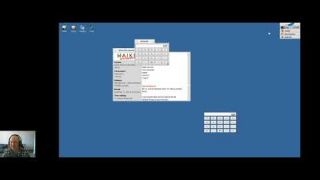
For a long time I've been looking for a BASIC dialect to extend for Haiku. Not to replace yab, but to act as a lower-tier tool to produce quick CLI... Show more

Michel Clasquin TCL/TK is actually available! I've ported quite a few programs: sites.google.com/view/michelshaikuapps/tcltk Loading content, please wait. 3 months ago
loader
loader
Attachment
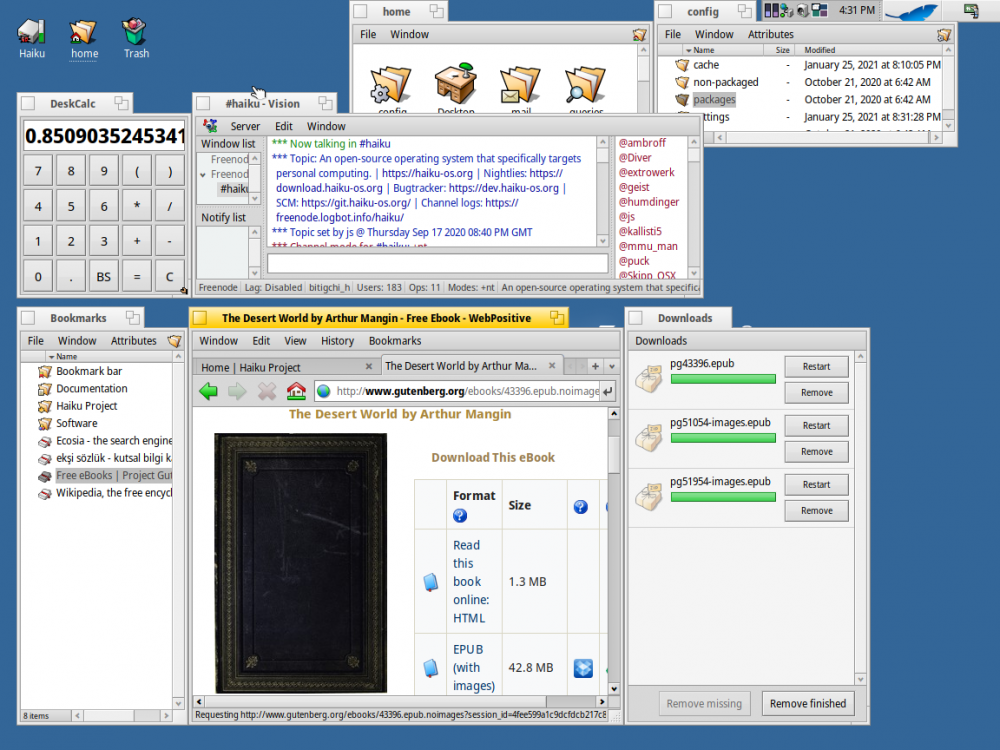
Michel Clasquin Meanwhile, just to show that I haven't abandoned yab, I wrote a little utility to create a window filled with buttons. according to a simple... Show more Loading content, please wait. 3 months ago
loader
loader
Attachment
stoltenberg Thank you, Michel! I will take a look. 3 months ago
loader
loader
Attachment

Haiku porter is a useful tool

I've just released BeAIM 1.7.1 which fixes several bugs and small annoyances. The most notable changes are that you can now see the profile message... Show more

Loading content, please wait.

To subscribe to a mailing list or not to that is the question

Bugs that only happen randomly sometimes without a way to reliably reproduce them can be really hard to fix.I have now already collected three BeAIM... Show more

Cookies user preferences
We use cookies to ensure you to get the best experience on our website. If you decline the use of cookies, this website may not function as expected.
Accept all
Decline all
Read more
Analytics
Tools used to analyze the data to measure the effectiveness of a website and to understand how it works.
Marketing
Set of techniques which have for object the commercial strategy and in particular the market study.
Functional
Tools used to give you more features when navigating on the website, this can include social sharing.
Stripe
Accept
Decline
Unknown
Unknown
Accept
Decline
Save